Effects & Pedals
The best bass pedals for beginners
Most beginners buy too many pedals too soon. Start with the ones that solve real problems — reliable tuning, consistent dynamics, and, if your music needs it, bass-friendly dirt.
The pedals worth buying first
TC Electronic Polytune 3
TC Electronic
Accurate, fast tuning with a bright display, plus a buffer that helps preserve your tone across longer cable runs.
- Best for
- Any bassist who plays with others or records.
- Skip if
- Bedroom players happy with a clip-on tuner.
- Watch out
- The full-size listing availability varies; this links to a live Amazon search so you can pick the in-stock version (standard or Mini).
Check Amazon for current price. Ratings and availability change. Verify on Amazon.
Check price on Amazon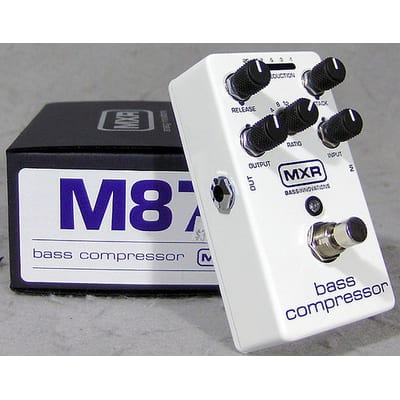
MXR M87 Bass Compressor
MXR
Gives clear metering and transparent control over dynamics, which smooths out inconsistent plucking and tames slap peaks.
- Best for
- Players wanting more consistent volume and a tighter recorded tone.
- Skip if
- Beginners who haven't yet developed a consistent right hand — learn technique first.
- Watch out
- Compression can mask timing issues; use it to enhance, not hide, technique.
Check Amazon for current price. Ratings and availability change. Verify on Amazon.
Check price on Amazon
Darkglass Microtubes B3K V2
Darkglass
A modern bass overdrive that adds grit while keeping your low end intact, a common failure point with guitar-oriented dirt pedals.
- Best for
- Rock and metal bassists who need dirt without losing bottom.
- Skip if
- Players who only need clean tones.
- Watch out
- Premium price; make sure you actually want dirt before buying.
Check Amazon for current price. Ratings and availability change. Verify on Amazon.
Check price on AmazonKey buying criteria
- Solves a real problem. Buy for tuning, dynamics, or a tone your music needs — not GAS.
- Bass-optimized. Guitar pedals often thin out low end; choose bass-voiced units.
- Power compatibility. Check voltage and current for your power supply.
What to check on Amazon before buying
- Power requirements (voltage/mA) match your supply.
- True bypass vs buffered, if that matters to your rig.
- Whether it's specifically voiced for bass.
- Enclosure size for your pedalboard.
Setup and usage tips
- Tuner first in the chain. A tuner with a buffer also helps preserve tone.
- Use compression subtly. Start with gentle settings and clear metering.
- Blend your dirt. Keep a clean low end under the overdrive.
Common mistakes to avoid
- Buying dirt too early. Learn clean tone and technique before adding effects.
- Guitar pedals that kill low end. Many guitar dirt pedals thin your bass.
- Ignoring power needs. Some pedals need more current than a basic supply provides.
How we choose
- We start from the buyer's actual problem, not the highest commission.
- We prioritize products with a long track record and broad availability.
- We call out who a product is wrong for, not just who it is right for.
- We tell you exactly what to verify on Amazon before you buy.
We only earn if you buy through our links, and it never changes the price you pay or what we recommend.
Final recommendation
Buy a tuner like the Polytune 3 first — it's the one pedal every bassist benefits from. Add the MXR M87 compressor once your technique is consistent, and the Darkglass B3K only if your music genuinely needs grit.
Get the free buying checklists
One useful email when we publish a new guide or printable. No spam, unsubscribe anytime.
Free download: Bass Buying Checklist (printable PDF)
Editorial guide last updated 2026-07-02. Product details require manual verification on Amazon before purchase.